Dr. Viral Prajapati
Stapes Surgery
Stapedectomy or stapedotomy replaces or modifies the stiff stapes bone using a delicate prosthesis.
About Stapes Surgery
Stapes surgery is a highly specialized procedure performed to improve hearing in patients with otosclerosis, a condition where the stapes bone becomes fixed and stops vibrating. When this tiny bone cannot move, sound cannot pass properly into the inner ear, causing gradual hearing loss. With modern microsurgical techniques, patients often experience significant and long-lasting improvement in hearing.
Stapes surgery is a highly specialized procedure performed to improve hearing in patients with otosclerosis, a condition where the stapes bone becomes fixed and stops vibrating. When this tiny bone cannot move, sound cannot pass properly into the inner ear, causing gradual hearing loss. With modern microsurgical techniques, patients often experience significant and long-lasting improvement in hearing.
What is Stapes Surgery?
Stapes surgery is a microsurgical procedure that restores movement in the middle ear. The surgeon removes part or all of the immobile stapes bone and replaces it with a tiny prosthesis.
This allows sound vibrations to be transmitted normally to the inner ear, improving hearing. The procedure is done under an operating microscope with fine instruments to ensure precision and safety.
Stapedectomy involves removing the entire stapes, while stapedotomy, a more modern approach, creates a small opening in the stapes footplate and attaches a prosthesis. Both methods help restore proper sound conduction.
Who Needs This Procedure?
Surgery is typically considered after audiometry and CT scans confirm the diagnosis. Stapes surgery is recommended for patients who have :
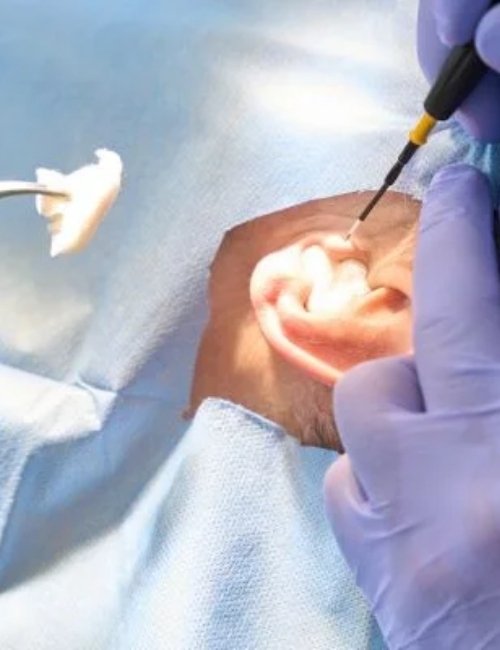
Stapes Surgery
How the Procedure Works
Stapes surgery is usually done as a day-care or short-stay procedure.
Audiometry and CT scanning confirm otosclerosis and assess middle ear health.
Usually performed under local anesthesia with sedation or general anesthesia.
A small incision is made inside the ear canal. The stapes bone is carefully accessed and replaced or modified.
A delicate prosthesis is attached to restore sound transmission.
The ear canal is gently packed, and the patient is monitored before discharge.
Benefits OF
Stapes Surgery

Improved Hearing
Significant improvement in sound clarity
Improved Quality of Life
Boosts confidence, social interaction, and daily functioning
Long-Term Results
High success rate with durable outcomes
Minimally Invasive
Small incision with microscope guidance
Recovery & Aftercare
Keep ear dry and avoid water exposure
Mild dizziness or imbalance may occur for 1–2 days
Long-term ear health maintenance is essential
Follow-up visits assess healing and hearing recovery
Why Consult
Dr. Viral Prajapati?

Choosing the right ENT specialist is essential for accurate diagnosis, safe treatment, and long-term ear, nose, and throat health. With a strong medical foundation, years of hands-on clinical experience, and a patient-centered approach, this ENT practice offers reliable care backed by proven expertise.
MBBS, MS ENT with strong expertise in middle ear microsurgery
Strong academic base with extensive practical exposure during training
Experience across multiple clinical departments during internship and residency
15+ years managing otosclerosis and advanced ear surgeries
Expertise in diagnosing both simple and complex ear, nose, and throat conditions
Trusted by patients for consistent and reliable treatment outcomes
- Hands-on experience at a high-volume government hospital
- Exposure to emergency care, pediatric cases, surgical procedures, and routine ENT management
- Skilled in precise microscope-guided stapedotomy and stapedectomy
Gentle technique ensures minimal trauma and fast recovery
Clear explanation of procedures to reduce anxiety and improve confidence
Uses safe, controlled techniques to avoid unnecessary discomfort
Frequently Asked Questions
Most patients notice improvement within days to weeks as healing progresses.
Yes, when performed by an experienced ENT surgeon, stapes surgery is safe with excellent outcomes.
Many patients no longer require one, depending on improvement.
Yes, but surgeries are done several months apart.
In many cases, it can run in families.